- 137 edge functions and ~77,000 lines of backend in production
- 22 product surfaces, shipped by one engineer in ten months
- 202,000 contacts across 68,000 companies; 8,627 emails delivered
Agentic client relationships, end to end.
AngelSend was not built to chase a market. It was built because AW3's own portfolio companies needed one place to run client relationships, and the alternatives did not fit. The average B2B sales stack runs 8.3 tools at $187 per rep per month, and they barely talk to each other. Over the same period cold-email reply rates fell from 8.5% in 2019 to 3.4% today. More tools, less contact.
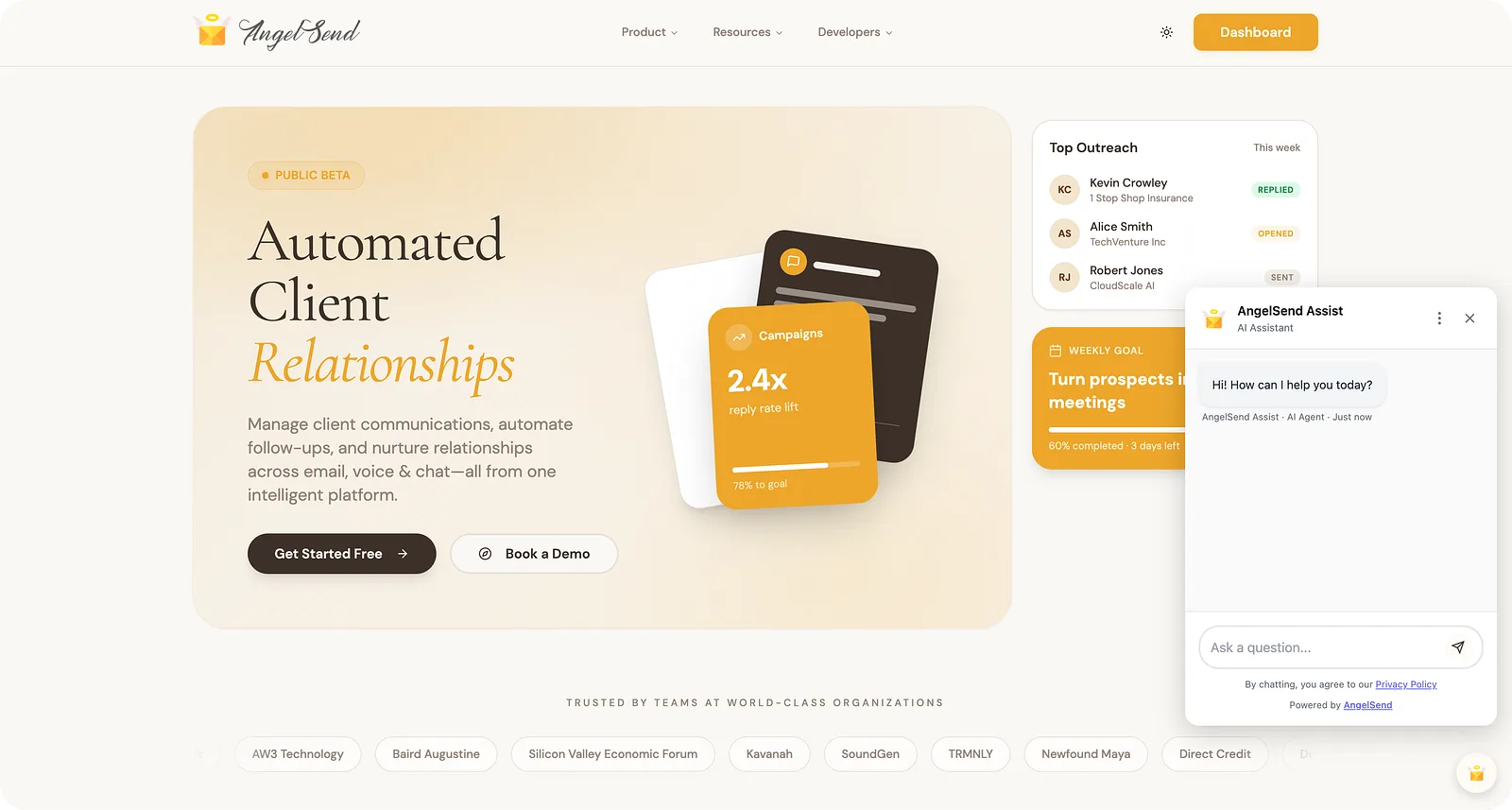
So we built the thing we wanted: nurture, automate and grow relationships across email, voice and chat, in one place, with an AI layer that does the work rather than describing it.
Why it exists
Every team AW3 works with hit the same wall. Outreach lives in one tool, replies in another, the CRM is a third, and the enrichment bill arrives separately. Nobody can see the whole relationship, so the follow-up never happens and the next email goes to someone who already replied.
What is actually built
Ten months from first commit, by a single engineer:
- 137 edge functions in production, about 77,000 lines of backend on Supabase
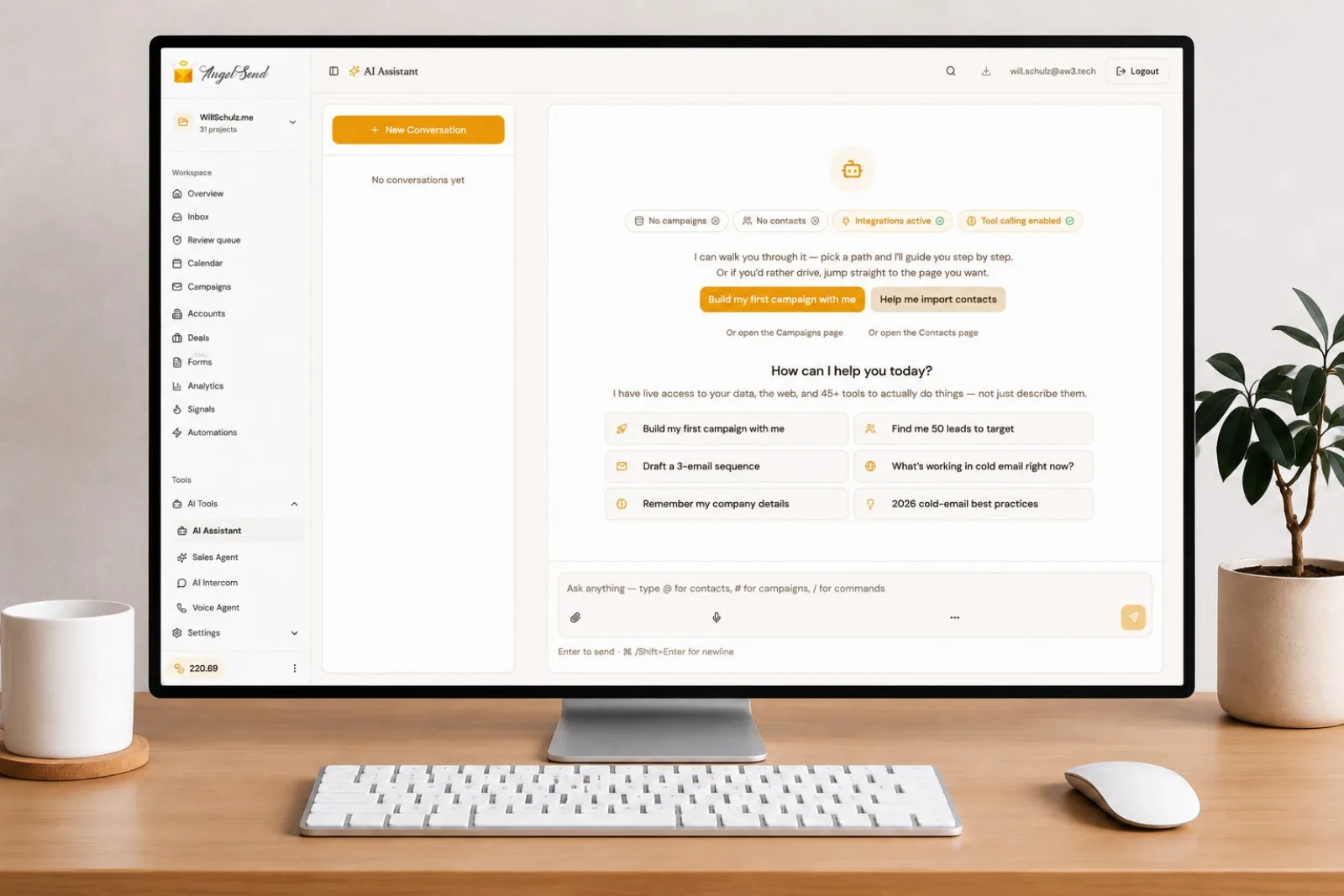
- 22 product surfaces — campaigns, unified inbox, contacts, accounts, a deals kanban, analytics, automations, calendar, forms, intent signals, a review queue, voice agents and team management
- About 165,000 lines of frontend across 1,226 TypeScript files, on 354 database migrations
- An AI assistant with 80+ tools that plans campaigns, drafts copy, sets up A/B tests, launches sends, configures follow-ups and auto-replies, manages suppression lists and reads the results back
- Deliverability plumbing most CRMs leave to you: do-not-email lists at account, project and team level, unsubscribe suppression, CAN-SPAM footers, bot-traffic filtering, inbox rotation, block lists and waterfall enrichment
What it does
Campaigns that run themselves. Multi-step sequences with automatic A/B testing and send-time optimisation. Anyone already contacted is excluded automatically, follow-ups are rule-driven, and a real reply stops the sequence.
One inbox for the whole team. Every mailbox reply in one place, with the original campaign envelope preserved — CC, BCC, reply-to, sender — so threads stay coherent. Starring, scheduling and open tracking, server-paginated and virtualised so it stays quick at volume.
A real CRM underneath. Contacts with segments and tag-based lists, accounts, a deals kanban, comments, attachments and tags on records. The database holds 202,000 contacts across 68,000 companies, with waterfall enrichment and contact recommendations scored against each campaign profile.
An AI layer with guardrails. The assistant proposes, you approve: a review queue for proposed actions, one-click undo, and persistent account memory with a conflict-resolution interface when what it remembers and what you say disagree.
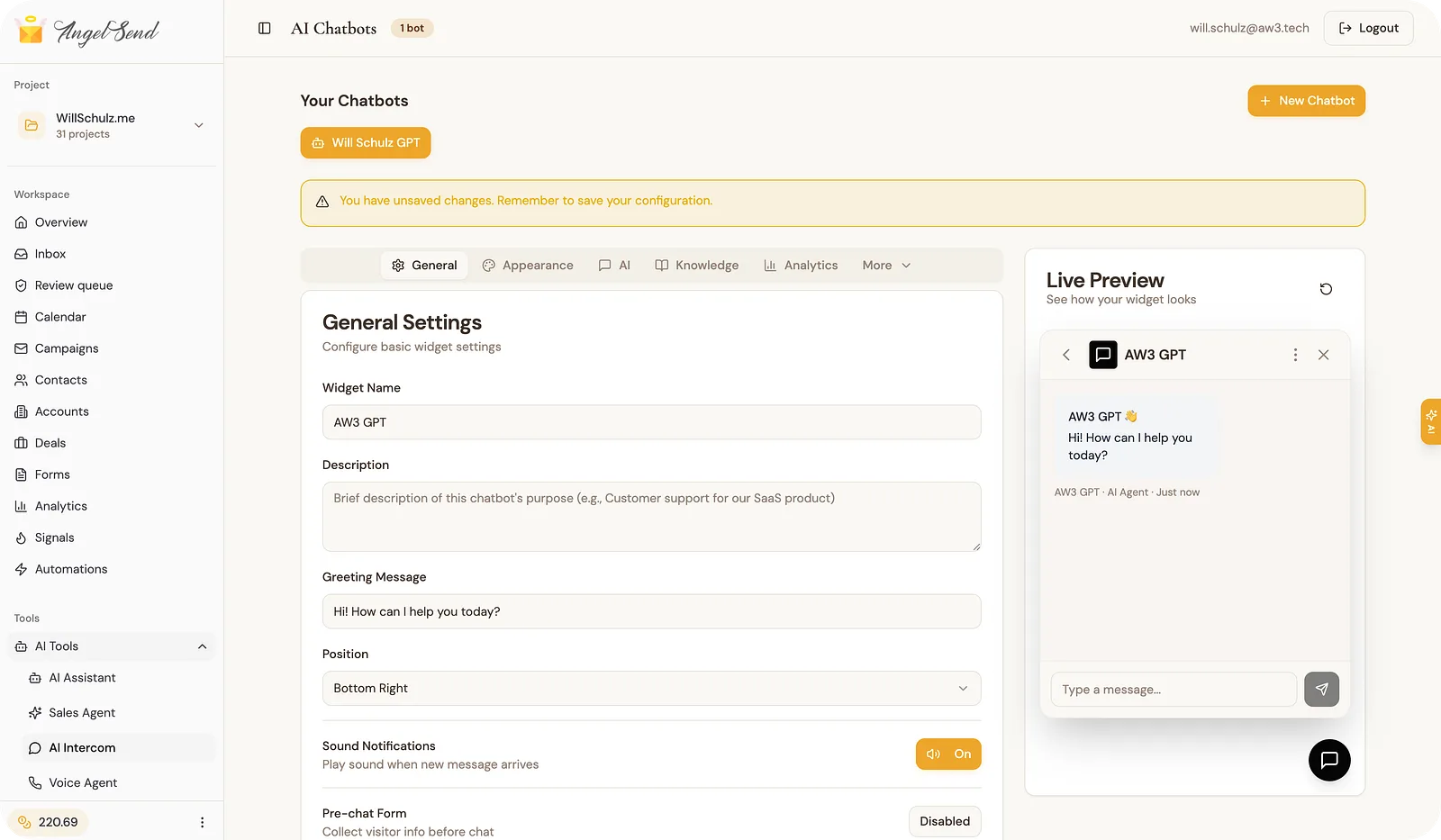
More channels than email. Configurable voice agents you can embed as a widget, and a support-chat widget with file attachments and AI action cards. Gmail and Outlook/Microsoft 365 connect natively for both sending and replies.
Built to be driven by machines. Everything the interface can do is exposed through a public REST API with scoped keys, plus an MCP server so agents, scripts and other tools can drive it directly.
Where it is being used
Baird Augustine, the neo-investment bank AW3 holds a stake in, runs its outreach on AngelSend. In production the system has delivered 8,627 emails against a database of 202,000 contacts and 68,000 companies.
Adoption is early and we would rather say so: 54 signups and 5 monthly active users. The product is built; the work now is getting teams to the point where it earns a place in their morning.
What happens next
- Activation. Getting a team from first login to a running campaign with results they can see, using the assistant for onboarding, targeting and personalisation rather than a setup checklist.
- Send capacity. The sender pool is small, so sending is throttled. A solvable infrastructure and deliverability problem, and the next one we are solving.
- The daily-driver slot. Moving from interesting to the tool a team opens first.
AngelSend is in public beta at angelsend.ai.